Compare STL Roofers · Lines that move
The lines that move after the roof is open
Some of a roofing quote is fixed the moment it is written. Some of it cannot be known until the old shingles are off. The difference between a good quote and a bad one is whether it says which is which.
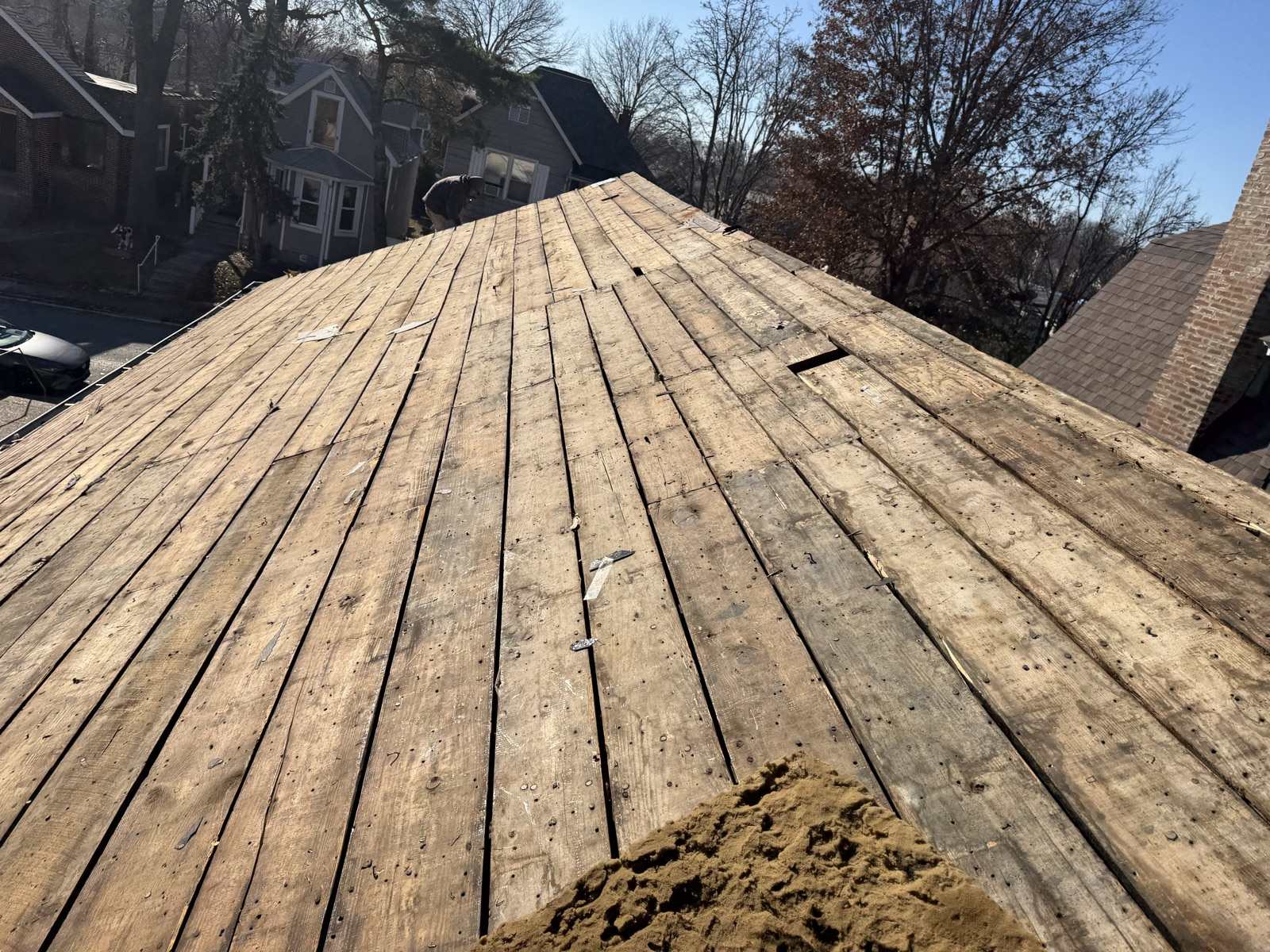
Every reroof has a moment in the middle of the first morning when the shingles come off and the crew sees what is actually there. On a house built after the war with plywood or sheathing panels in good condition, nothing happens. On an older St. Louis house with plank decking, quite a lot can happen, and it happens while you have an open roof, a crew on the clock and very little negotiating position.
This is not a scam. It is the physical reality of the job. What separates companies is whether they priced the possibility in advance and told you, or left it to be discovered.
The five lines that move
Decking replacement
The big one. Boards split around old nails, boards rot under a leak that had been ignored, and gaps between planks can be too wide to hold a fastener properly. A good quote names a unit price, per sheet or per board, agreed before the job starts. A quote that says nothing about decking is not cheaper than one that does, it is simply silent, and silence gets priced on the day.
What is the unit price, and do you photograph the bad boards before they are covered?Extra layers
Most quotes assume one layer of existing roofing. Two or three layers means more labour and materially more disposal weight. Ask what the quote assumes and what the adjustment is if the assumption is wrong. If the roofer has been in the attic or has looked at an eave edge, they usually already know.
How many layers are you assuming, and what does a second layer add?Fascia, drip edge and the gutter line
The edge of the roof is where water has been sitting for years, and rotten fascia board is often found only when the drip edge comes off. This one is usually a modest number, but it is also the one most likely to appear as an unpleasant surprise, because it is nobody's headline item.
If the fascia is soft, is that included or extra, and at what rate?Chimney and masonry work
Almost every roofer excludes masonry, correctly, because tuckpointing is a different trade. But a chimney with failing mortar cannot take counter flashing properly, so the exclusion can turn into a stalled job. If your house has a chimney of any age, ask about it before the tear-off rather than during it.
Does my chimney need masonry work before you can flash it correctly?Ventilation changes
If the attic is under ventilated, the correct fix may involve adding intake at the soffit, which is not always in the original quote. Some manufacturers exclude ventilation related failure from their product coverage, so this is not an optional extra in the way it sounds. Why that matters to the warranty.
Is my current intake adequate for the exhaust you are installing?
Nothing gets added to the bill without your signature first. Put that sentence in writing, on the contract, before you sign it. A company that agrees to it without hesitation has told you how it runs jobs. A company that explains why that is impractical has told you something else.
How to compare two quotes on the unknowns
Do not compare the totals. Compare the assumptions and the unit rates, because those are the only parts that are actually comparable when neither company can see under your shingles. Write down four things from each quote: how many layers are assumed, the decking unit price, whether fascia is included, and whether change orders require a signature. Two quotes that are three thousand dollars apart on the total can be identical on all four, or wildly different, and only the second case tells you anything.
Then ask for photographs. A crew that sends you pictures of the bad boards before they are covered is a crew that expects to be checked, and expecting to be checked is most of what quality control is on a residential roof. It also gives you a record, which is worth having if the roof ever becomes an insurance question, because the documentation is yours to keep and the claim stays in your name.
If you want a written scope that lines up against the two you already have, that is a phone call. The measurement, the photographs and the written scope are yours to keep whether or not you hire anybody.
Get the unknowns priced before the crew arrives
Decking, extra layers, rotten fascia and chimney work are all priced after the roof is open, which is the worst possible moment to be discussing them for the first time.
Ask every company, this one included, to put those unit prices in writing beforehand. Keys states them on the face of the scope.
Straight through to the Keys Roofing office. If you would rather talk it through than type it out, this is the line.
Ask for the third scope
Roof replacement. St. Louis metro only.
This goes to Keys Roofing and nowhere else. No other company named on this site receives it.